 March 13, 2019 11:26 am
Published by Janet Muncy
March 13, 2019 11:26 am
Published by Janet Muncy
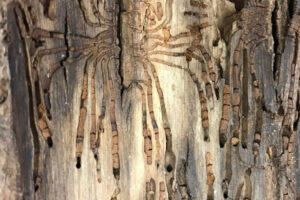
The southern pine beetle typically gets all the attention, but there are other native bark beetles in our forests that often go unnoticed. One such beetle is the hickory bark beetle, Scolytus quadrispinosus. Adults are black, stout, and small – about 1/5 inch long. They fly to the tops of trees and feed on terminal growth, and then bore into the bark of trunks and branches to lay eggs. Females... Read More
 February 26, 2019 2:47 pm
Published by Janet Muncy
February 26, 2019 2:47 pm
Published by Janet Muncy
National Invasive Species Awareness Week kicked off this week. A series of events and webinars offered throughout the week aim to raise awareness and identify solutions to invasive species issues at local, state, tribal, regional, international and national scales. Invasive species are plants, insects, pathogens or other animals intentionally or accidentally introduced into a region where they did not evolve. Their introduction causes, or is likely to cause, economic or... Read More
 February 22, 2019 12:52 pm
Published by Janet Muncy
February 22, 2019 12:52 pm
Published by Janet Muncy
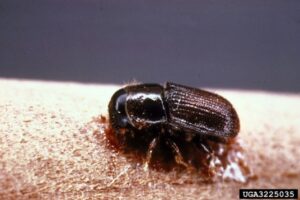
The southern pine beetle (Dendroctonus frontalis) (SPB) is a small, seemingly innocuous beetle that brings new meaning to the phrase “small but mighty.” These beetles are known as the most destructive native forest insect in the Southeastern United States. While a single adult beetle is only about 1/8 inch long, the ability to aggregate quickly means these tiny insects can overtake a pine tree’s defenses in a short period of time.... Read More
 February 14, 2019 3:50 pm
Published by Janet Muncy
February 14, 2019 3:50 pm
Published by Janet Muncy
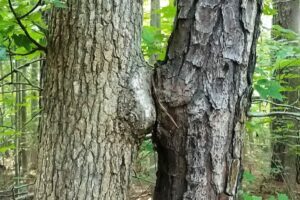
Kissing Trees! by Area Forester Lisa Deaton Valentine’s Day seems like an appropriate time to share these images of “kissing” trees. A tree, bark first, will slowly grow over stationary objects it encounters, such as nails, signs nailed to the tree, or ropes or chains. I am guessing that these formations started when the branch of one tree encountered the trunk of the other tree. A sweetgum and a loblolly... Read More
 January 24, 2019 11:28 am
Published by Janet Muncy
January 24, 2019 11:28 am
Published by Janet Muncy
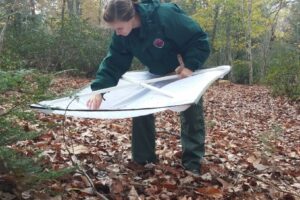
Each month, Field Notes will bring you news from our forest health team. We kick off 2019 with a focus on winter activities and the hemlock wooly adelgid. What do forest entomologists do in the winter? We look for hemlock woolly adelgid! The Forest Health program staff at DOF surveys for many forest pests throughout the year, but the hemlock woolly adelgid is unique in that it is most active... Read More
